The Strategic Gateway for Global Logistics Through Iran
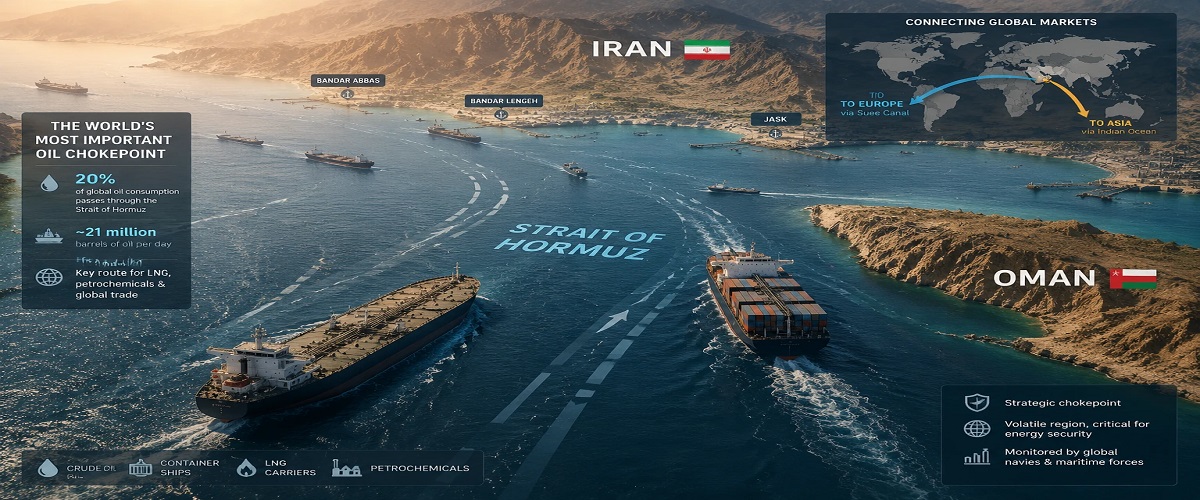
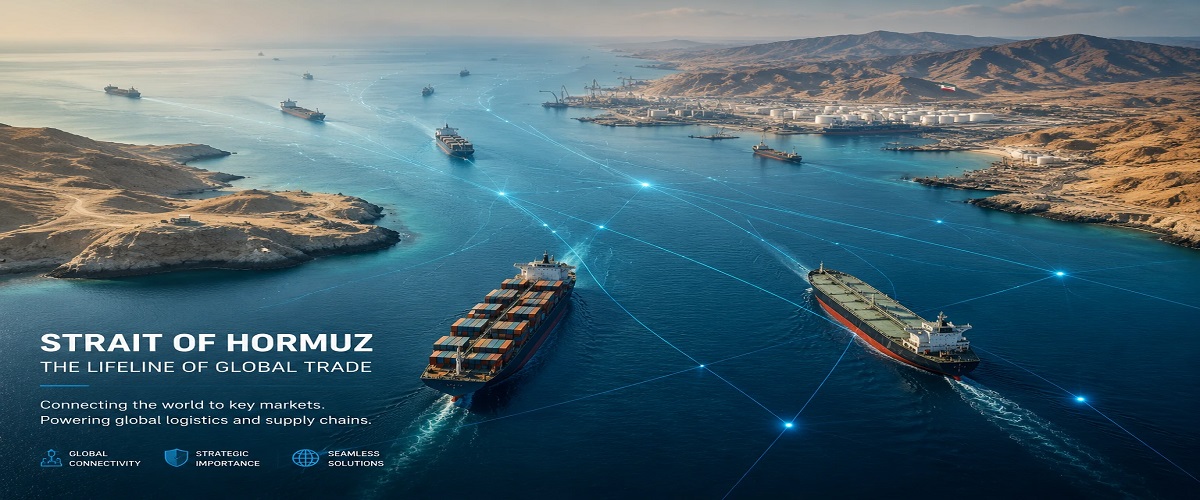
The Strait of Hormuz is one of the most critical maritime chokepoints in the global supply chain. Located between Iran and Oman, this narrow waterway connects the Persian Gulf to the Gulf of Oman and the Arabian Sea. Every year, a large portion of global trade flows through the Strait of Hormuz, making it a strategic gateway for international shipping and logistics.
For companies seeking reliable trade routes between Asia, the Middle East, and Europe, Iran’s geographic position along the northern coast of the Strait of Hormuz offers significant logistical advantages. With modern ports, expanding transport infrastructure, and access to regional markets, Iran plays a key role in facilitating international transit operations.
Businesses looking to optimize their supply chains increasingly consider Iran as a logistics hub connected to the Strait of Hormuz, allowing efficient multimodal transport solutions combining sea, rail, and road networks.
Why the Strait of Hormuz Is Critical for Global Trade
The Strait of Hormuz is widely recognized as one of the most important shipping lanes in the world. A substantial percentage of global energy exports and commercial goods pass through this narrow maritime corridor every day.
Several factors make the Strait of Hormuz strategically vital:
It connects the Persian Gulf with international ocean trade routes.
It serves as the main export route for energy-producing countries in the Gulf region.
It provides access to major international ports serving Europe, Asia, and Africa.
Because of these factors, any company involved in global freight transport must consider the Strait of Hormuz shipping corridor as a key element in international logistics planning.
For logistics operators, the proximity of Iranian ports to this strategic waterway creates strong opportunities for efficient cargo distribution across Eurasia.
Iran’s Strategic Ports Near the Strait of Hormuz
Iran’s southern coastline along the Strait of Hormuz hosts some of the region’s most important commercial ports. These ports serve as critical entry and exit points for international cargo.
Key logistics ports include:
Bandar Abbas
Bandar Abbas is Iran’s primary maritime gateway located close to the Strait of Hormuz. The port connects international shipping routes with inland transport networks across Iran.
Shahid Rajaee Port
Shahid Rajaee Port is the largest container port in Iran and a major hub for regional trade. Its advanced infrastructure allows efficient cargo handling and rapid transit to inland destinations.
Because these ports are directly connected to road and rail corridors, cargo arriving through the Strait of Hormuz can quickly move toward Central Asia, Afghanistan, Turkey, and Europe.
Countries Using the Strait of Hormuz and Major Cargo Flows
The Strait of Hormuz is a vital maritime corridor for many countries involved in global trade and energy exports. Several Gulf nations rely heavily on this waterway to transport goods and resources to international markets.
Countries that depend on the Strait of Hormuz include:
- Iran
- Saudi Arabia
- United Arab Emirates
- Kuwait
- Qatar
- Iraq
- Bahrain
These countries export large volumes of strategic commodities through the Strait of Hormuz, including:
- crude oil
- liquefied natural gas (LNG)
- petrochemical products
- refined petroleum products
- industrial raw materials
In addition to energy exports, the Strait of Hormuz also handles containerized cargo, machinery, construction materials, consumer goods, and food products moving between Asia, Europe, and the Middle East.
Because of the concentration of energy resources in the Persian Gulf, the Strait of Hormuz remains one of the most important transportation routes for global energy supply chains.
Iran as a Logistics Bridge Between Sea and Land Corridors
Iran’s location near the Strait of Hormuz allows it to function as a bridge between maritime shipping routes and inland transport corridors.
Cargo entering Iranian ports can quickly move through a network of highways and railways toward neighboring markets. This creates efficient multimodal logistics solutions combining sea, road, and rail transport.
Compared with longer maritime routes, using Iran as a transit hub can significantly reduce transit times between Asia and Eurasian markets.
Iran plays a key role in facilitating Central Asia transit via Iran, providing efficient access from the Strait of Hormuz to landlocked markets in the region.
Countries such as:
-
- Kazakhstan
- Uzbekistan
- Tajikistan
- Kyrgyzstan
benefit from transit routes that connect their economies to global maritime trade.
Cargo arriving through the Strait of Hormuz can be transported through Iranian road and rail corridors toward Central Asia, enabling faster access to international shipping routes.
This route allows Central Asian exporters to ship commodities such as minerals, metals, agricultural products, and textiles to global markets via Iranian ports.
Transit to and from Afghanistan and Pakistan via Iran
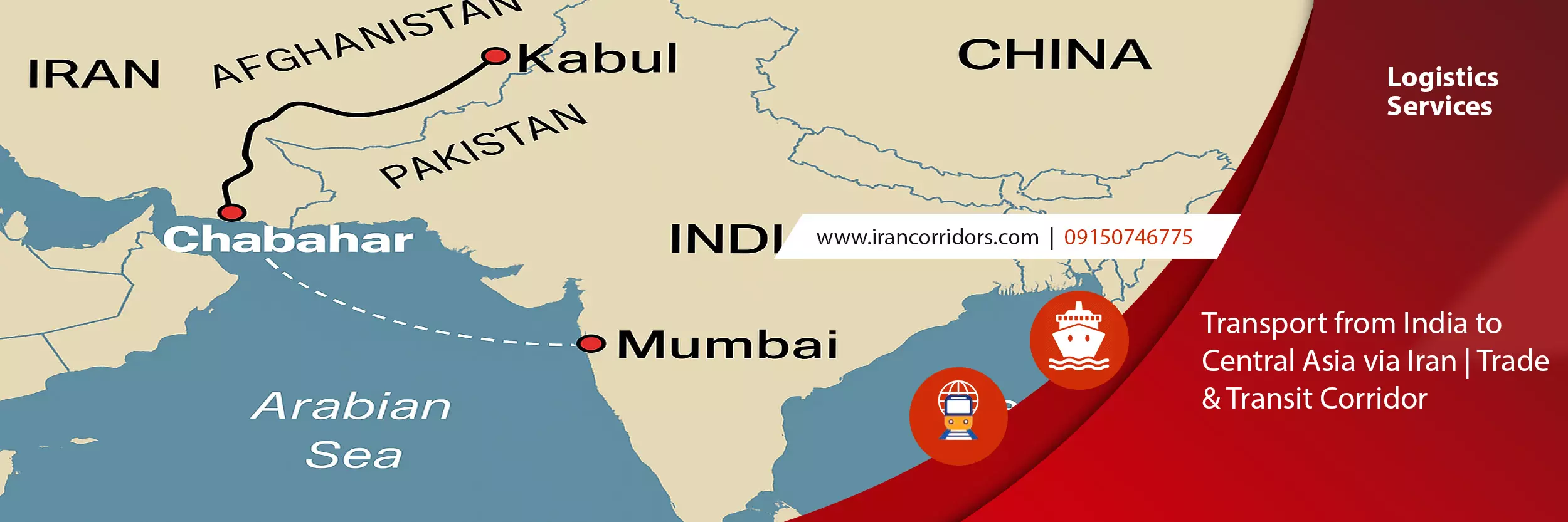
Iran also provides a vital logistics corridor for Transit to and from Afghanistan and Pakistan via Iran.
Due to their geographic position, Afghanistan and parts of Pakistan rely on regional transit routes to connect with global shipping networks.
By using Iranian ports near the Strait of Hormuz, cargo can move efficiently toward:
- Afghanistan via eastern Iranian corridors
- Pakistan through cross‑border logistics routes
This corridor supports the transport of goods such as construction materials, agricultural products, industrial equipment, and consumer goods.
The proximity of Iran to the Strait of Hormuz ensures that cargo shipments from these countries can reach international maritime routes quickly and efficiently.
Transit to and from Turkmenistan via Iran
Another important regional logistics route is Transit to and from Turkmenistan via Iran.
Turkmenistan is a resource-rich country with strong export potential in energy and raw materials. However, as a landlocked country, access to maritime trade routes is essential.
Through Iran’s transport infrastructure, cargo from Turkmenistan can reach the Strait of Hormuz and global shipping networks.
This corridor supports the transport of:
- petrochemical products
- natural gas derivatives
- industrial materials
- agricultural commodities
Using Iran as a transit route provides Turkmenistan with reliable access to international markets.
Future Opportunities for Logistics Through the Strait of Hormuz
As global trade continues to expand, the strategic importance of the Strait of Hormuz will remain central to international logistics.
Iran’s ongoing investments in port development, rail connectivity, and logistics infrastructure are strengthening its position as a regional transport hub.
For international businesses, leveraging logistics routes connected to the Strait of Hormuz offers opportunities for:
- faster transit times
- cost‑effective transportation
- improved supply chain resilience
- access to emerging regional markets
Companies that integrate maritime shipping with inland transit through Iran can create highly efficient global supply chains.
FAQ Section
What is the Strait of Hormuz and why is it important?
The Strait of Hormuz is a strategic maritime passage connecting the Persian Gulf to the Arabian Sea. It is one of the world’s most important shipping routes for energy exports and international trade.
Which countries depend on the Strait of Hormuz for exports?
Countries such as Iran, Saudi Arabia, UAE, Kuwait, Qatar, Iraq, and Bahrain rely on the Strait of Hormuz to export oil, gas, and other goods to global markets.
Why is Iran important for logistics near the Strait of Hormuz?
Iran’s ports and transport infrastructure provide direct access from the Strait of Hormuz to Central Asia, Afghanistan, Pakistan, and Turkmenistan through efficient land corridors.
Can landlocked countries access global markets through Iran?
Yes. Countries in Central Asia and neighboring regions use transit routes through Iran to reach international shipping lanes connected to the Strait of Hormuz.
Strait of Hormuz map؟
The Strait of Hormuz is a strategically vital maritime chokepoint located between the Persian Gulf and the Gulf of Oman. It is approximately 39 kilometers wide at its narrowest point and lies between Iran and Oman.
Strait of Hormuz map live?
Live vessel tracking for the Strait of Hormuz can be accessed through various online maritime traffic monitoring services, which use AIS (Automatic Identification System) data to show real-time ship movements.
Strait of Hormuz closed by Iran? yes
Strait of Hormuz Google map?
You can view the Strait of Hormuz on Google Maps by searching for “Strait of Hormuz.” The map will display its geographic location, surrounding countries, and major shipping lanes.
Strait of Hormuz is controlled by which country?
The Strait of Hormuz is international waters. However, Iran controls the northern side and Oman controls the southern side. International maritime law permits free passage for all vessels.
Map of Iran and Strait of Hormuz?
Maps showing Iran and the Strait of Hormuz typically illustrate Iran’s southern coastline adjacent to the strait, with Oman located on the opposite side. This visualization highlights the strait’s strategic position relative to Iran.
Strait of Hormuz open or closed?
The Strait of Hormuz is currently open for international shipping, as is its long-standing status. While threats of closure have occurred, it remains a vital and functioning maritime passage.
How does Iran close the Strait of Hormuz?
Iran could theoretically attempt to close the Strait of Hormuz by blocking passage with naval forces or mines. However, such an action would be extremely difficult to sustain, highly provocative, and would likely lead to severe international repercussions.