The Zangezur or “Trump Corridor”: A Real Alternative to Iran’s Transit Route?
Introduction
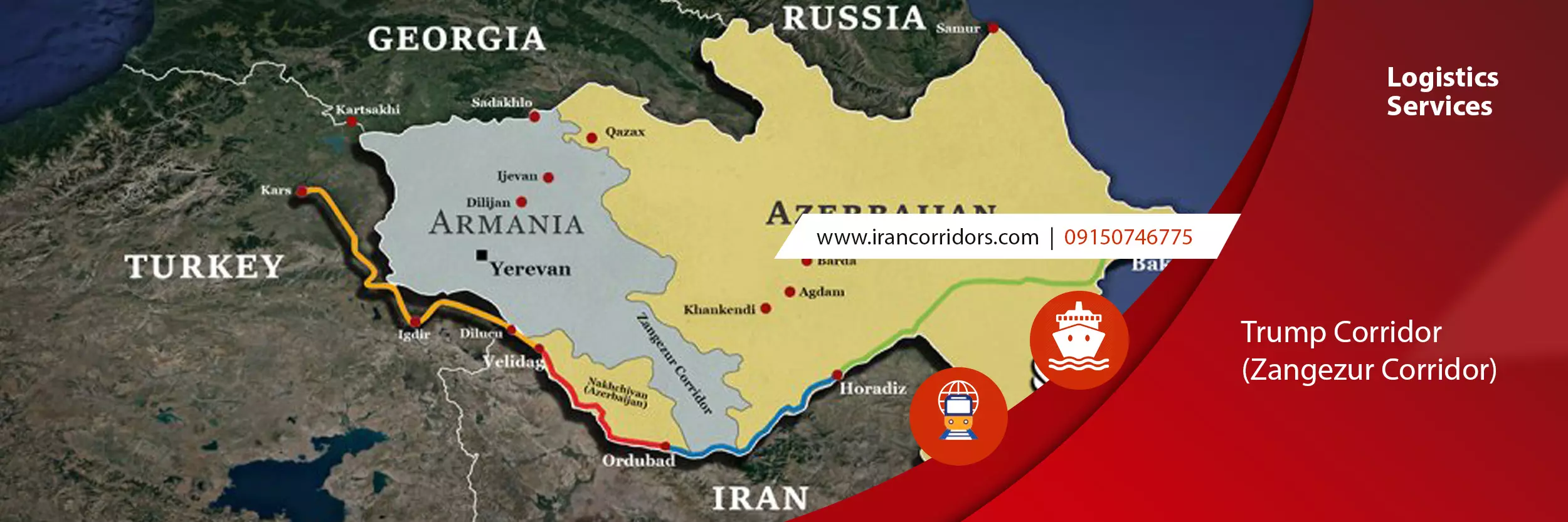
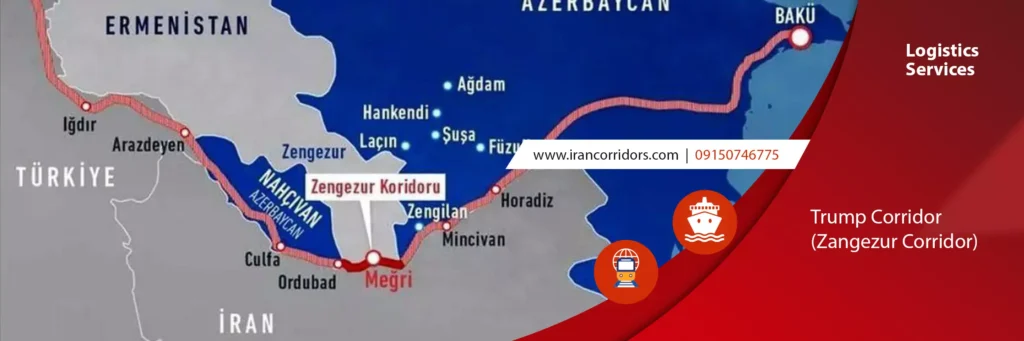
In recent years, the South Caucasus has once again become a geopolitical hotspot. Among the major developments is the proposal for a new transit route called the Zangezur Corridor, often referred to in international media as the “Trump Corridor”. The project aims to connect mainland Azerbaijan with its exclave Nakhchivan, and from there to Turkey, bypassing Iran.
Supporters argue that if completed, the Zangezur Corridor could give Central Asian countries and even China an alternative land bridge to Europe, reducing dependence on Iran. However, the reality is much more complicated. The corridor faces political resistance, infrastructural gaps, and long implementation timelines. Even if it becomes operational, Iran’s geographical advantages and established infrastructure will remain essential for many trade flows.
This article explores the geopolitics, opportunities, risks, and future outlook of the Trump Corridor, while also explaining why Iran is likely to remain a central hub for regional transit for years to come.
What Is the Zangezur (Trump) Corridor?
The Zangezur Corridor refers to a proposed land passage through the Syunik province of Armenia, designed to link Azerbaijan to Nakhchivan. Once connected, this route could also extend to Turkey and further westward into Europe.
Key features include:
A railway and highway crossing through Armenia’s southern strip.
Direct connection between Azerbaijan and Turkey without passing through Iran.
Integration with the Middle Corridor (Trans-Caspian International Transport Route), which connects Central Asia to Europe.
The term “Trump Corridor” gained popularity in media after U.S. officials during the Trump administration encouraged regional projects that reduced reliance on Iran and Russia.
Current Challenges to Implementation
While the corridor looks promising on paper, several challenges make it unlikely to replace Iran in the near future.
1. Political Resistance in Armenia Armenia strongly opposes the project, as it threatens its sovereignty in Syunik. Local communities see the corridor as a “land grab” that could divide the country. Without Yerevan’s approval, the project cannot move forward.
2. Russian Involvement and Regional Uncertainty Russia has military presence in Armenia and historically influences transit decisions. Moscow may oppose or delay the project, especially if it weakens its own North-South corridor interests with Iran.
3. Infrastructure Deficit Currently, there is no modern railway or highway through the proposed corridor. Building reliable transit infrastructure could take 5–10 years and billions of dollars.
4. Security Concerns The South Caucasus is prone to conflicts between Armenia and Azerbaijan.
Political instability could deter major logistics and shipping companies.
Why the Corridor Will Not Replace Iran Soon
Despite the hype, the Zangezur Corridor is far from operational. More importantly, even when it becomes functional, Iran will remain a strategic necessity for many trade flows.
1. Established North-South Transport Corridor (INSTC) Iran is already integrated into the International North-South Transport Corridor, connecting Russia, Central Asia, the Caucasus, and India. This established network reduces the attractiveness of a risky, untested route. 2. Shorter and Safer Access to the Persian Gulf Central Asian countries like Turkmenistan, Kazakhstan, and Uzbekistan rely on Iran’s rail and road links to reach the Persian Gulf. No corridor through Armenia or Turkey can replace this direct southward access.
3. Reliability and Capacity
Iran has decades of experience handling bulk commodities such as sulfur, petrochemicals, and metals. For landlocked Central Asian exporters, Iran remains the most cost-efficient way to reach markets in India, China, and the Middle East.
Who Would Benefit From the Trump Corridor?
If implemented, the Zangezur Corridor would mainly benefit: Azerbaijan: gaining direct land access to Nakhchivan and Turkey.
Turkey: strengthening its role as a logistics hub between Asia and Europe.
European countries: receiving Central Asian goods faster if the route is reliable. However, for countries like Kazakhstan, Turkmenistan, Kyrgyzstan, Tajikistan, and Uzbekistan, the Iran route remains more practical for southbound trade.
The Timeline: When Could It Become Operational?
Short-term (0–5 years): Highly unlikely to operate due to Armenia’s opposition.
Medium-term (5–10 years): Possible partial construction if political agreements are reached.
Long-term (10+ years): Only with massive investment, security guarantees, and regional stability.
Realistically, Iran’s role will not be undermined for at least a decade.
Iran vs. the Trump Corridor: Complementary or Competitive?
Rather than a zero-sum game, both corridors could coexist. Here’s why:
Europe-bound cargo from Central Asia may use both Iran and Zangezur depending on cost and speed.
Southbound cargo to the Persian Gulf, India, or East Africa will still depend on Iran.
Political risks in Armenia could drive shippers back toward Iran even if Zangezur is built.
Why Iran Remains Essential
1. Gateway to the Persian Gulf and Indian
Ocean Iran provides direct maritime access via Bandar Abbas, Chabahar, and Imam Khomeini ports. Landlocked states cannot reach South Asia and the Middle East without Iran.
2. Central Position in Eurasian Trade
Iran sits at the crossroads of Asia, Europe, and the Middle East, making it a natural transit hub. Any alternative would require longer detours or face political instability.
3. Established Logistics Network
Iran already manages thousands of rail wagons and trucking fleets across its borders.
In contrast, Zangezur has no tested capacity yet.
Case Studies: Why Central Asian Countries Still Need Iran
Kazakhstan → India: Oil and wheat exports use Iran’s rail lines to Bandar Abbas.
Turkmenistan → China: Despite proximity, large volumes of sulfur and chemicals go via Iran for sea shipment.
Uzbekistan → UAE: Textiles and metals are trucked to Bandar Abbas and shipped onward.
Armenia → Middle East: Even Armenia itself uses Iran for access to the Persian Gulf.
Conclusion
The so-called Trump Corridor (Zangezur Corridor) may look like a game-changer on maps, but in reality, it faces political, infrastructural, and security challenges that could delay or even prevent its full implementation.
Even if it becomes functional in the next decade, Iran will continue to play a crucial role in regional transit. Its geographical location, established logistics infrastructure, and direct access to the Persian Gulf ensure that countries in Central Asia, the Caucasus, and beyond will keep relying on Iran.
For logistics planners, shippers, and policymakers, the message is clear: the Trump Corridor may complement the region’s transit map, but it will not replace Iran.
 Frequently Asked Questions (FAQ)
Q1: What is the Trump Corridor (Zangezur Corridor)?
The Trump Corridor, also known as the Zangezur Corridor, is a proposed transit route through Armenia to connect Azerbaijan with Turkey, bypassing Iran.
Q2: Can the Trump Corridor replace Iran’s transit routes?
Not in the near future. The corridor faces political, security, and infrastructure challenges. Iran remains the fastest and most reliable route for Central Asia.
Q3: Which countries would benefit most from the Trump Corridor?
Azerbaijan and Turkey would benefit directly, while Central Asia and Europe could gain partial advantages if the corridor becomes operational.
Q4: How soon can the Trump Corridor become operational?
Experts believe it could take at least 5–10 years, depending on political agreements and heavy infrastructure investment.
Q5: Why is Iran still important for regional transit?