Transit to and from India via Transport Corridor Iran
How Transit from India via Iran Becomes Faster and More Cost-Effective?
Transit of goods from India through Iran is one of the shortest and most cost-effective routes in the global transportation network.
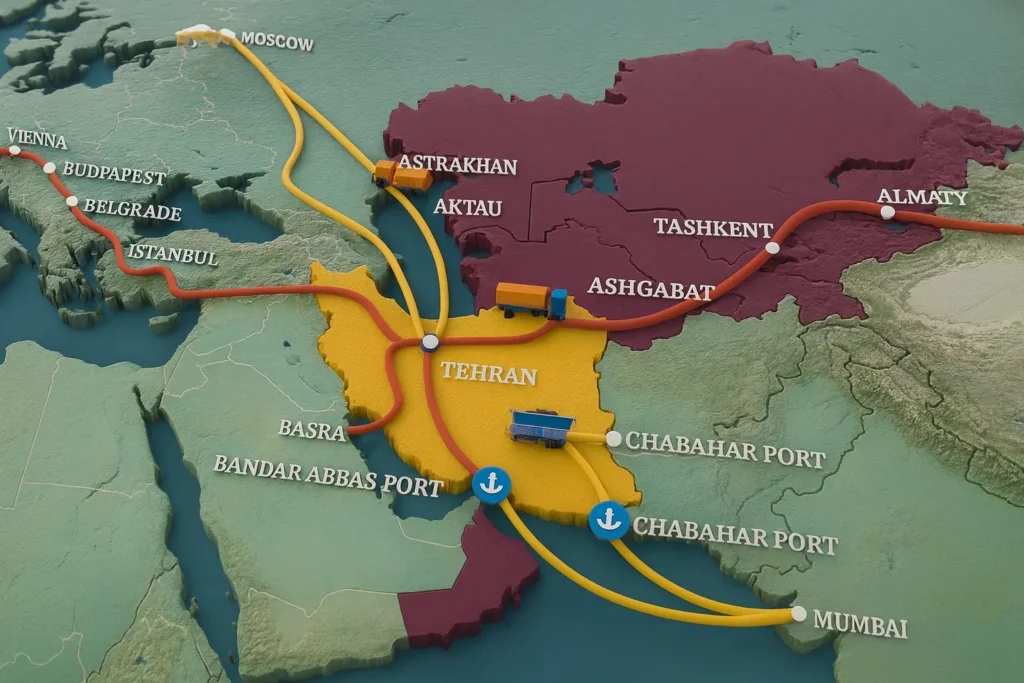
Instead of using long sea routes, cargo is shipped from India’s southern ports to Chabahar Port or other southern Iranian ports, and then transported via Iran’s rail and road corridors toward Russia, Europe, and Central Asia. This route not only reduces costs and transit time but also provides higher security for shipments.
Advantages of Transit from India via Iran
Reduced Transportation Costs: The Iranian route offers significantly lower logistics expenses compared to long maritime and indirect routes.
Faster Delivery: Cargo from southern Indian ports reaches Iran’s Chabahar or southern ports and is then moved toward Russia, Europe, and Central Asia much faster than traditional sea routes
- Greater Security: The corridor avoids risks of piracy, port congestion, and chokepoints in maritime transport.
- Efficient Infrastructure: Access to Iran’s road and rail networks, along with Caspian Sea connections, ensures smooth cargo movement.
Expanded Market Access: This route connects Indian goods directly to Russia, Europe, and Central Asian markets.
It also complements Transit to and from Afghanistan and Pakistan via Iran, strengthening South Asia trade links.
Reliable Solutions for Transit to India via Iran (North-South Corridor)
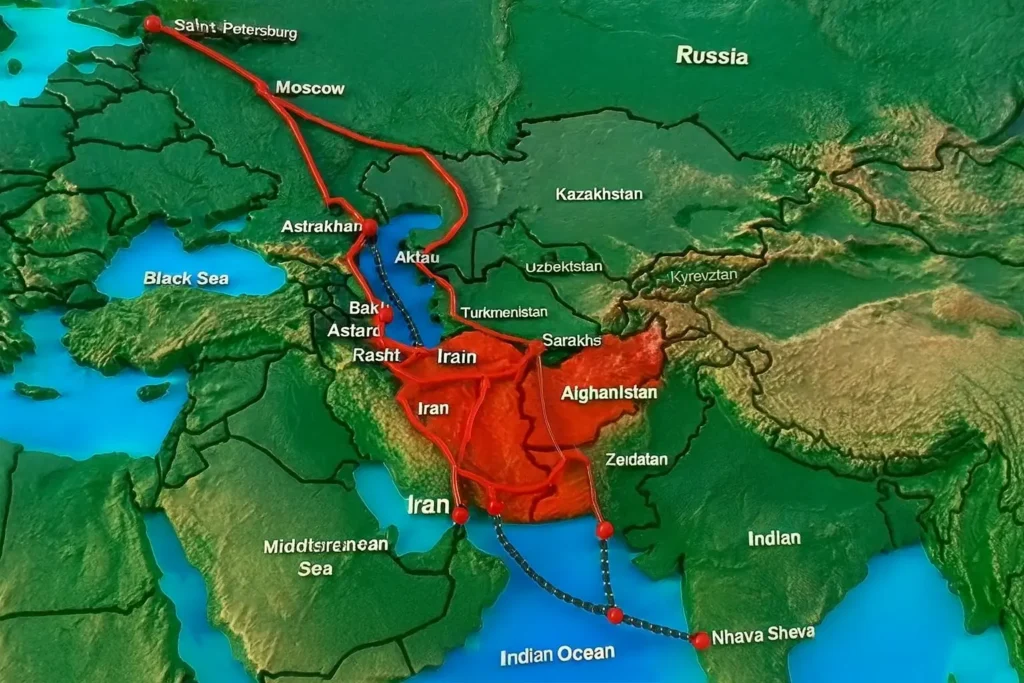
Countries such as Russia and European nations can transport their cargo through Iran’s northern borders and then move them via Iran’s road and rail networks to the southern ports.
Subsequently, the shipments are sent from Chabahar Port or the Persian Gulf ports to Indian ports. This route represents a key segment of the Iran–India North–South Corridor, enabling a direct connection along the India–Iran–Russia–Europe route.
Advantages of Transit to India via Iran (North-South Corridor)
Lower Costs: The Iranian route significantly reduces freight and logistics expenses.
Shorter Transit Time: Moving cargo from Europe and Russia to India via Iran is much faster than long maritime routes.
Enhanced Security: The corridor avoids risks associated with piracy and congested maritime chokepoints.
- Modern Infrastructure: Access to Iran’s rail, road, and Chabahar Port ensures fast and efficient cargo flow.
Direct Access to Indian Market: The corridor provides the most reliable and strategic option for companies shipping goods to India.
Why is Iran the Best Transit Route for India?
Iran, as the main hub of the International North-South Corridor, plays a vital role in global transit. The route through Iran is not only shorter and more cost-effective, but it also:
- Significantly reduces transportation costs.
Shortens the transit time for cargo from India to Europe and vice versa.
Provides greater security compared to long maritime routes.
It also connects with Transit to and from Central Asia via Iran, offering faster access to landlocked markets.
Serves as a strategic option for shippers and international logistics companies.
Comparative Table of India’s Transit Routes
| Benefits | India–Iran (North-South Corridor) | Maritime Routes (via Suez Canal) | Other Overland Routes (via Central Asia/China) |
|---|---|---|---|
| Faster Transit | 15–25 days (up to 40% faster) for India–Europe via Russia–Iran–India corridor. | 35–45 days, long sea voyage from India to Europe. | 25–35 days depending on border crossings and infrastructure delays. |
| Lower Costs | Multimodal (rail, road, sea) transport cuts freight & logistics costs significantly. | Higher shipping & port handling fees. | Costly due to multiple customs, tariffs, and less integrated logistics. |
| Trade Stability | Lower exposure to maritime bottlenecks & sanctions; alternative to traditional sea lanes. | Heavily dependent on Suez Canal & Red Sea security. | Subject to political tensions in Central Asia & long land borders. |
| Modern Infrastructure | Access to Chabahar Port, Iranian railways, roads, and Caspian Sea network ensures efficiency. | Limited to ports and shipping companies, vulnerable to congestion. | Infrastructure gaps and varying standards across multiple countries. |
| Market Access & Security | Direct access to Russia, Europe, Central Asia with reliable security and reduced risks. | Mainly Europe via Suez; limited inland connectivity. | Access to Central Asia/China, but higher political/security uncertainties. |
In addition to the India–Iran–Russia–Europe route, many businesses also rely on Transit to and from China via Iran as part of wider Eurasian connectivity.
Need a Trusted Partner for Transit to and from India via Iran?
Discover certified freight forwarders specializing in transit from India via Iran and transit to India via Iran through the International North–South Transport Corridor (INSTC). From fast customs clearance in Iran to seamless rail, road, and sea shipping, our network delivers complete logistics solutions.
Whether shipping from Mumbai via Chabahar Port or importing cargo through the Caspian Sea, we provide faster delivery times, lower costs, and reliable control across the entire India–Iran–Russia–Europe route.
Move smarter with the North–South Corridor India–Iran—your strategic gateway connecting South Asia with Europe, Russia, and Central Asia.
Strategic Opportunity
Don’t miss the opportunity to use Iran’s strategic route; simply fill out the form to receive international transport services.

Fast & Cost-Effective
To benefit from the fastest and most cost-effective international transport services via Iran, fill out the form now.

Gateway to Global Markets
"A secure gateway to Europe, Russia, and Central Asia; complete the form and access international transport services through Iran.

Seamless Global Connection
Experience smooth and reliable international transport through Iran’s corridor; just fill out the form to get started.
Transit to and from India via Iran – Get Started Today
Looking to arrange transit from India via Iran or transit to India via Iran as part of the North–South Corridor (India–Iran–Russia–Europe Route)?
Fill out the form on the right to receive customized quotes, detailed transit options, and connect with trusted logistics providers specializing in the International North–South Transport Corridor (INSTC).
We provide full multimodal logistics support—rail, road, and sea transport—along with fast customs clearance in Iran, optimized routing through Chabahar Port and Caspian Sea shipping, ensuring smooth and reliable delivery.
✔ 15–25 day transit times (up to 40% faster than maritime routes)
✔ Competitive international freight rates with lower logistics costs
✔ Reduced sanctions and political risks compared to alternative corridors
✔ Direct connection to India, Iran, Russia, Europe, and Central Asia
FAQ: India Transit via Iran Corridor — Key Routes and Logistics Support
What is the main transit route for goods from India to Europe and Central Asia through Iran’s corridor?
Goods are first shipped from western Indian ports (e.g., Mumbai) to Iran’s Chabahar Port. From there, they move via Iran’s road and rail network to northern ports (such as Anzali and Amirabad) or land borders with Turkmenistan and Azerbaijan. The cargo can then continue toward Russia, Central Asia, and even Europe.
What are the technical and logistical advantages of using Iran’s corridor compared to the Suez Canal route?
Iran’s route reduces transit time by roughly 30–40%, lowers container shipping costs, and eliminates risks associated with maritime congestion in the Suez Canal. Moreover, Iran’s rail network provides direct connectivity to Russia and Eastern Europe.
What types of goods are most commonly transported via this corridor?
Bulk and medium-value commodities such as minerals, grains, agricultural products, industrial and semi-finished goods, as well as multi-purpose containers requiring multimodal (sea–road–rail) transport are most frequently handled.
What key infrastructure does Iran provide to support this corridor?
The critical infrastructure includes Chabahar Port (entry point from India), Iran’s eastern and northern rail networks, international transit highways, Caspian Sea ports, and border terminals with Azerbaijan and Turkmenistan. The ongoing Chabahar–Zahedan railway project will significantly boost the corridor’s capacity.