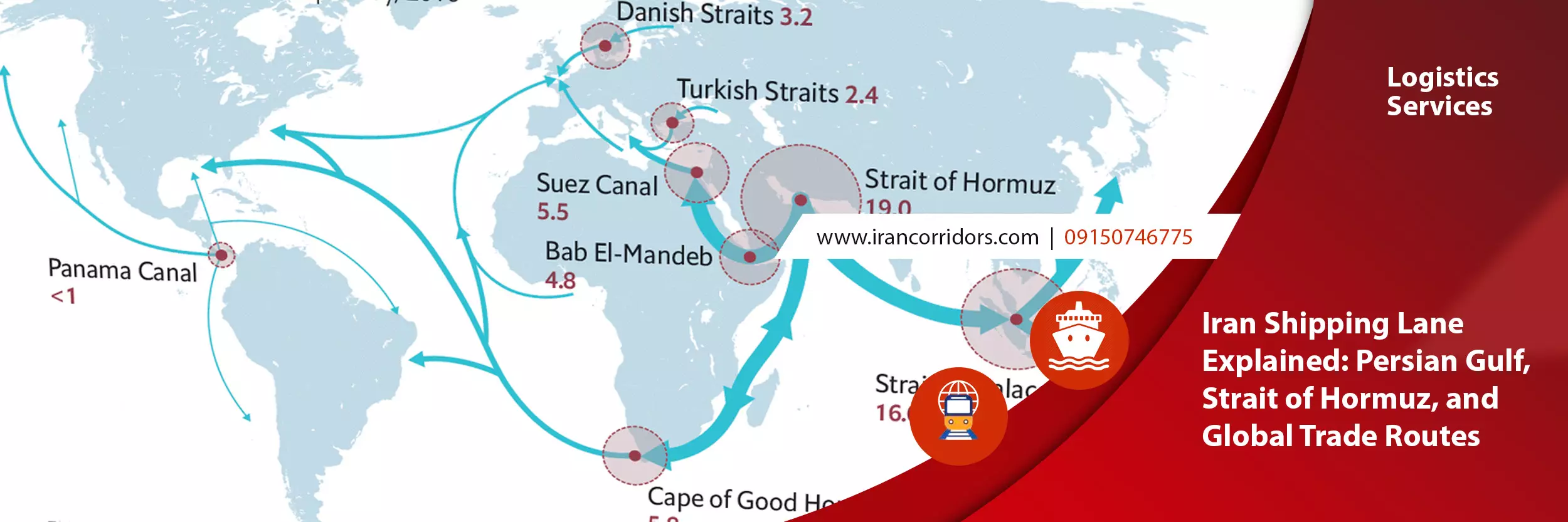
Introduction
Iran’s strategic location along the Persian Gulf and the Gulf of Oman makes it a pivotal hub for maritime transit in the Middle East. The Iran shipping lane serves as a vital corridor connecting Central Asia, China, India, Russia, and Europe to global markets. Leveraging Iran’s ports and maritime infrastructure allows exporters and importers to reduce transit times and costs while ensuring reliable logistics support.
Iran Transportation Corridor: Key Role in China to Europe Rail Freight, India–Iran–World and Central Asia Transit Routes
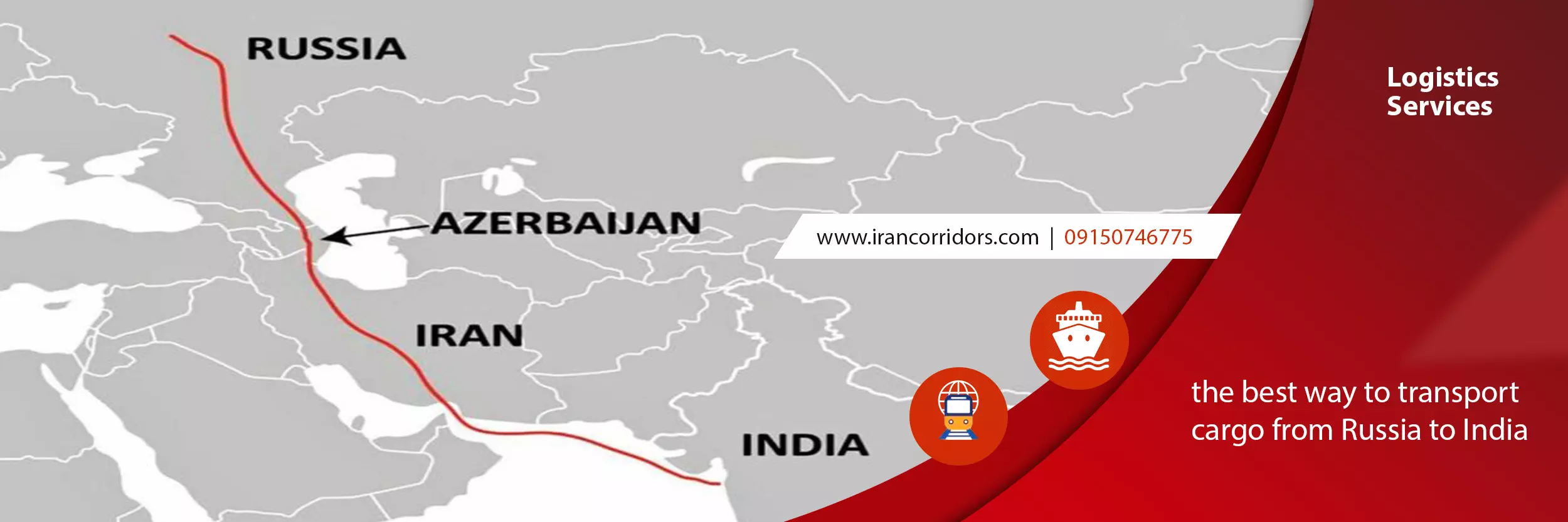
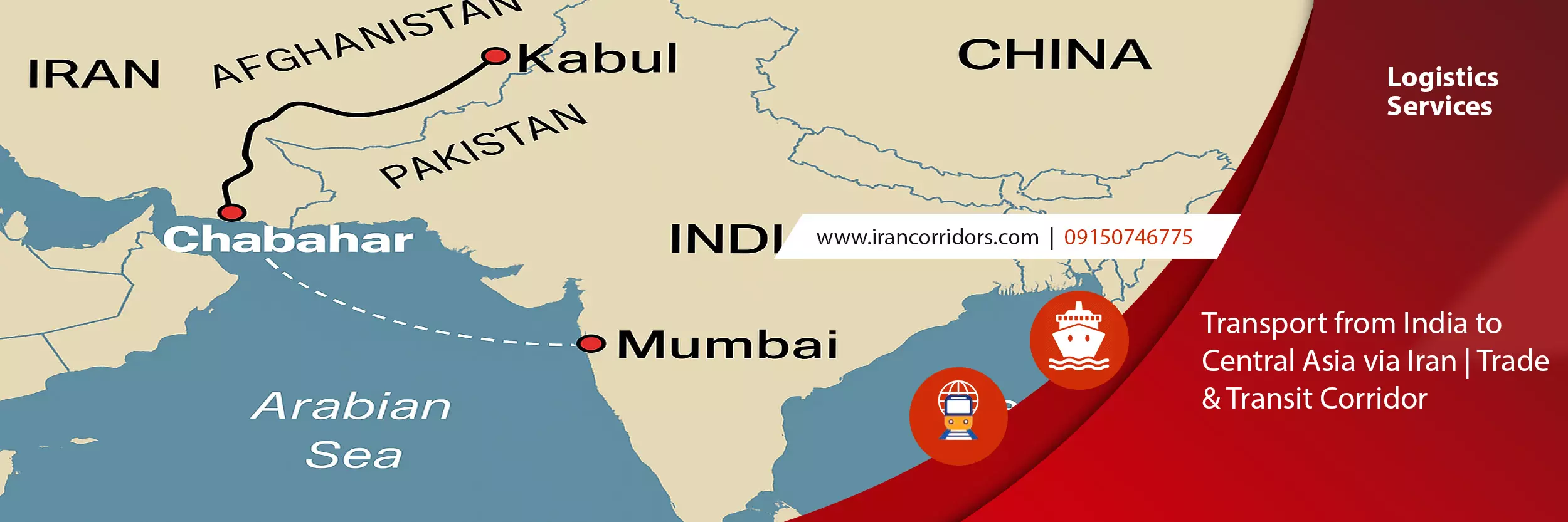
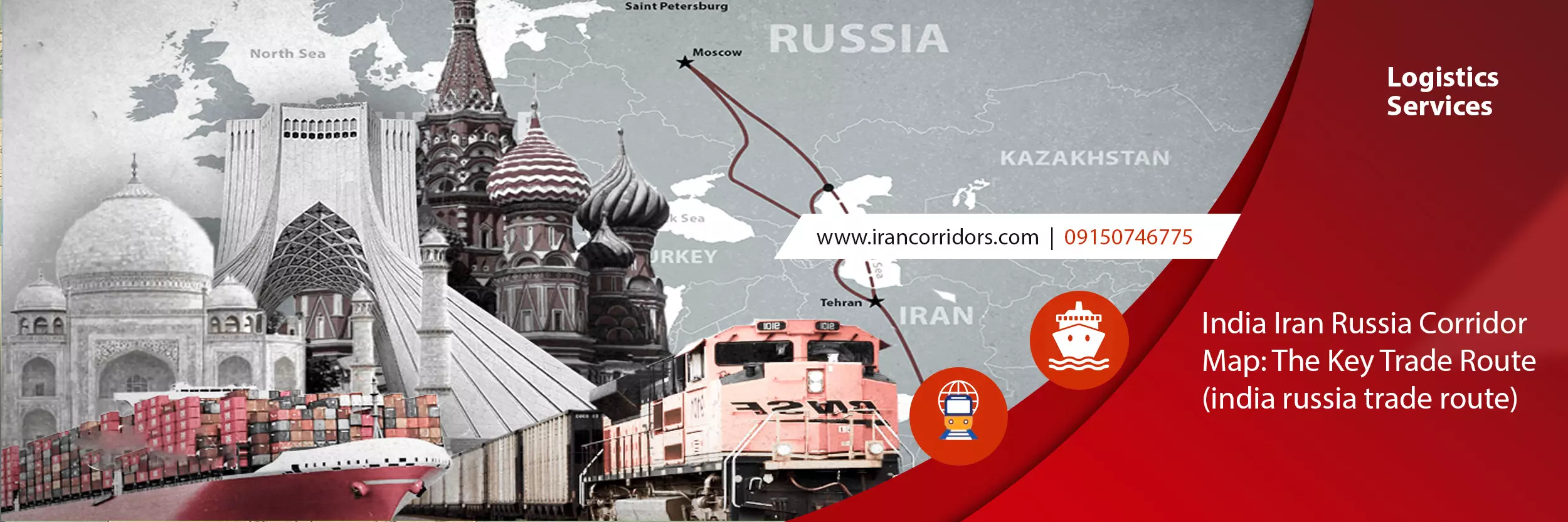
The Iran transportation corridor serves as a strategic hub for multiple international freight routes. For the China to Europe rail freight, it provides a faster and more reliable alternative compared to traditional northern routes, integrating sea and overland transport. Similarly, the India–Iran–world freight corridor and Pakistan–Iran–world freight corridor enable seamless cargo movement from South Asia to global markets, combining maritime and rail connections for cost efficiency. Additionally, the Central Asia to world transit via Iran leverages both Iranian ports and multimodal logistics solutions, offering exporters and importers reduced transit times, lower costs, and a secure, well-managed gateway for goods moving to Europe, the Middle East, and beyond.
Key Maritime Routes via Iran
Iran’s maritime transit network consists of several major corridors:
-
Northern Ports: Bandar Abbas & Bandar-e Anzali
- Bandar Abbas, located on the Strait of Hormuz, is Iran’s largest port and a critical gateway for cargo from Asia and Europe.
- Bandar-e Anzali on the Caspian Sea facilitates trade with Central Asia, especially Turkmenistan, Kazakhstan, and Russia.
-
Persian Gulf to Indian Ocean Corridor
- This route connects Iran’s southern ports to India, Pakistan, and beyond.
- Ideal for bulk cargo, container shipments, and energy-related products.
-
Caspian Sea Connection
- Through ports like Bandar-e Anzali and Amirabad, Iran provides access to Azerbaijan, Kazakhstan, and Russia.
- Often used for rail-maritime multimodal shipments, integrating shipping and overland transport.
-
Hormuz Strait & Gulf of Oman Access
- Allows direct shipping to the Middle East, South Asia, and Africa.
- Major Iranian ports along this corridor include Bandar Abbas, Chabahar, and Jask, offering container handling, bulk, and oil shipment facilities.
-

Iran shipping lane
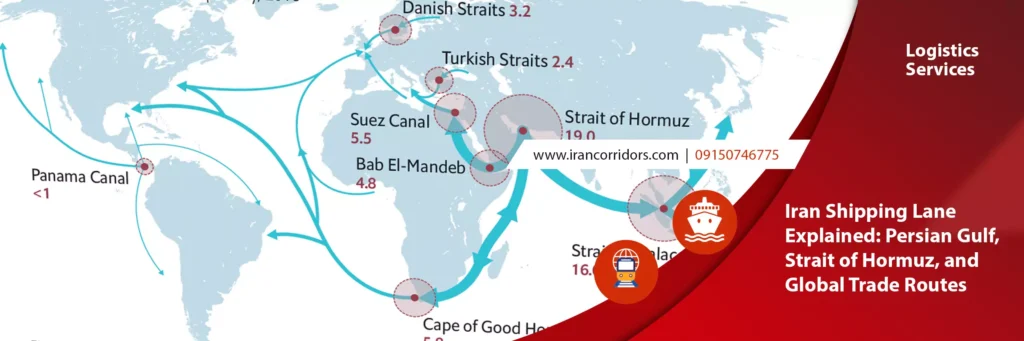
Origins of Cargo Using Iran Shipping LanesIran’s maritime corridors are not limited to local trade. Common origins include:
- China: Electronics, machinery, and consumer goods bound for Europe or Central Asia.
- India: Agricultural products, textiles, and industrial materials.
- Russia: Machinery, metals, and raw materials.
- Europe: High-value goods and equipment transiting to Middle East and Central Asia.
- Central Asia: Turkmenistan, Uzbekistan, Kazakhstan, and Kyrgyzstan often use Iranian ports to access international markets efficiently.
Benefits of Using Iran Shipping Lanes
- Reduced Transit Time
- Compared to routes via the Suez Canal or Northern Sea, Iran shipping lanes offer a faster connection for Central Asia and South Asia.
- Cost Efficiency
- Competitive port fees and streamlined customs procedures make Iran a cost-effective alternative for international shipping.
- Multimodal Flexibility
- Cargo can move seamlessly between sea, rail, and road, connecting landlocked countries like Afghanistan, Turkmenistan, and Uzbekistan to global markets.
- Strategic Hub Advantage
- Iran’s position enables cargo to reach Europe, Africa, and Asia efficiently without relying solely on congested maritime chokepoints like the Suez Canal.
Ports Overview
- Bandar Abbas: Main container port with advanced handling facilities.
- Chabahar: Deep-water port, key for transit to Afghanistan and Central Asia.
- Bandar-e Anzali: Caspian port for northern trade.
- Amirabad Port: Bulk cargo and multimodal connectivity.
Conclusion
The Iran shipping lane is a strategic maritime corridor that connects multiple continents, offering fast, reliable, and cost-efficient transit. By leveraging Iran’s ports, exporters and importers from China, India, Russia, Europe, and Central Asia can access global markets while minimizing delays and maximizing logistics efficiency.
FAQ – Iran Shipping Lane
Q1: What is the Iran shipping lane and why is it important?
A: The Iran shipping lane is a key maritime corridor connecting Central Asia, China, India, Russia, and Europe through Iran’s ports. It is important because it offers faster, cost-efficient, and reliable transit for international cargo, avoiding congested routes like the Suez Canal.
Q2: Which Iranian ports are used in the Iran shipping lane?
A: Major ports include Bandar Abbas, Chabahar, Bandar-e Anzali, and Amirabad. These ports handle container shipments, bulk cargo, and multimodal transport, serving as gateways for international trade.
Q3: What types of cargo typically use the Iran shipping lane?
A: The shipping lane handles various cargo, including machinery, electronics, textiles, agricultural products, and raw materials. Cargo from China, India, Russia, Europe, and Central Asia often transit through Iran.
Q4: How does using the Iran shipping lane benefit shippers?
A: Benefits include reduced transit times, lower shipping costs, multimodal transport options, and access to markets in Europe, Central Asia, the Middle East, and South Asia.
Q5: Can goods from landlocked countries use Iran shipping lanes?
A: Yes. Landlocked countries like Turkmenistan, Uzbekistan, and Afghanistan use Iran’s ports for both rail and road multimodal transport, connecting to international shipping lanes efficiently.
Q6: How does Iran’s geographic location influence global trade?
A: Iran’s strategic location along the Persian Gulf, Gulf of Oman, and Caspian Sea provides a central hub connecting Asia, Europe, and the Middle East, facilitating faster and more reliable trade routes.
Q7: Is the Iran shipping lane suitable for multimodal transport?
A: Absolutely. Iran’s shipping corridors integrate sea, rail, and road transport, enabling seamless cargo movement from origin countries to global markets.
Q8: Do you want to ship your cargo via sea using Iran?
A: If you are looking for a fast, reliable, and cost-effective maritime route, Iran’s shipping corridor is the ideal choice. Our trusted network of logistics partners can handle cargo from China, India, Russia, Central Asia, or Europe via Iran, with end-to-end services including customs clearance, multimodal transport, and direct connections to international markets. To get started, simply call us directly or fill out the form on this page — our partners will respond quickly to your request.